


Celebrating David Suzuki - 90 Years of Fighting for the Planet

There are very few people you can point to and say: this person genuinely changed how millions of us see the world. David Suzuki is one of them. This May, the beloved Canadian scientist, broadcaster, author, and environmental champion turned 90 - and the occasion was marked with exactly the kind of joyful, passionate celebration you'd expect for a man who has never stopped fighting for the planet he loves.
On 22 May 2026, Vancouver's Queen Elizabeth Theatre filled with musicians, activists, Indigenous leaders, and old friends for "Legacy: A Celebration of David Suzuki at 90." Artists like Sarah McLachlan, Bruce Cockburn, and Chantal Kreviazuk took to the stage. Jane Fonda and Al Gore offered tributes. And David himself - sharp, warm, and characteristically determined — made clear that at 90, he has no intention of going quietly.
"How can you retire when you see what's going on in the world and you have grandchildren? There's no such thing as retiring." - David Suzuki
Born in Vancouver on 24 March 1936, Suzuki's path to becoming one of the world's most recognised environmental voices was far from straightforward. As a child, he and his family - like thousands of Japanese Canadians - were interned during World War II, an injustice that shaped his lifelong sensitivity to the abuse of power and the vulnerability of those who can't defend themselves. Nature became his refuge, and science became his language.
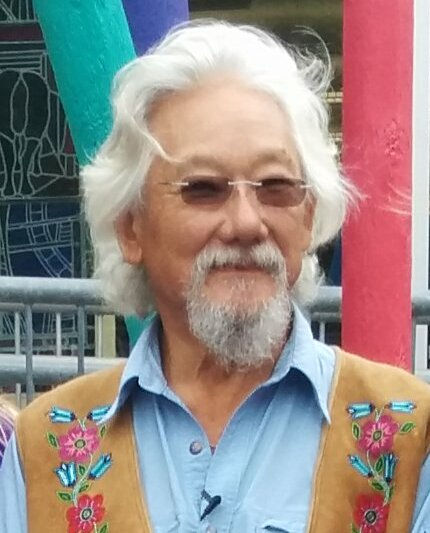
After earning a PhD in zoology from the University of Chicago, Suzuki became a professor and a respected geneticist. But it was his gift for communication that would define his legacy. He had a rare ability to take complex science and make it feel urgent, personal, and alive - and television was the perfect medium for it.

When Suzuki took over as host of CBC's The Nature of Things in 1979, it was already a respected science programme. What he did with it was extraordinary. For over four decades, the show reached audiences in more than 50 countries, exploring everything from genetics to climate, from ocean ecosystems to the inner workings of the human brain. It remains one of the longest-running science programmes in television history.
But Suzuki didn't stop there. His 1985 series A Planet for the Taking - which saw him travel the world examining humanity's relationship with nature - won a United Nations Environment Program Medal and marked a turning point in his career. This was no longer just science communication. This was a call to action.
In 1990, Suzuki and his partner Tara Cullis co-founded the David Suzuki Foundation, a non-profit dedicated to finding practical solutions to environmental challenges. Over the decades it has grown into one of Canada's most trusted environmental organisations, influencing policy, funding research, and mobilising communities across the country and beyond.
Suzuki has also been a prolific writer - authoring more than 50 books on topics ranging from genetics to ecology, for audiences ranging from scientists to young children. His most celebrated work, The Sacred Balance, argues that we must fundamentally rethink our relationship with the natural world - not as something separate from us, but as the very foundation of our existence. The book has sold hundreds of thousands of copies and remains as relevant today as when it was first published.

The accolades have come in waves: the Order of Canada (upgraded to Companion status in 2006, the highest civilian honour), UNESCO's Kalinga Prize for science communication, the Right Livelihood Award —- often called the "Alternative Nobel Prize" - and more than 30 honorary degrees from universities around the world. He has also been formally adopted by eight Indigenous nations in Canada and Australia, a recognition that speaks to the depth of his respect for First Nations communities and their relationship with the land.
What makes Suzuki's legacy remarkable isn't just what he's personally achieved - it's what he's inspired. The environmental movement has changed enormously over 90 years, from a niche concern to one of the defining issues of our time. School strikes, international agreements, grassroots campaigns, and a generation of young activists who refuse to be quiet: all of this sits, in part, on the shoulders of people like Suzuki who spent decades insisting that the science was real and that action was possible.
He has always been honest about the frustrations - the political inertia, the corporate resistance, the pace of change that never quite matches the pace of the crisis. But he has never given up. At 90, surrounded by friends, family, and a concert hall full of people who believe what he believes, Suzuki's message was the same as it has always been: the planet needs us, and it needs us now.
Happy 90th, David. The world is better for every year you've spent speaking up for it.


Comments