


Did you know: The animal that refuses to grow up

The axolotl is one of the world’s most remarkable animals, and its story is as surprising as its looks. It is a salamander that lives almost entirely in water, keeps its feathery gills as an adult, and can regrow lost body parts.
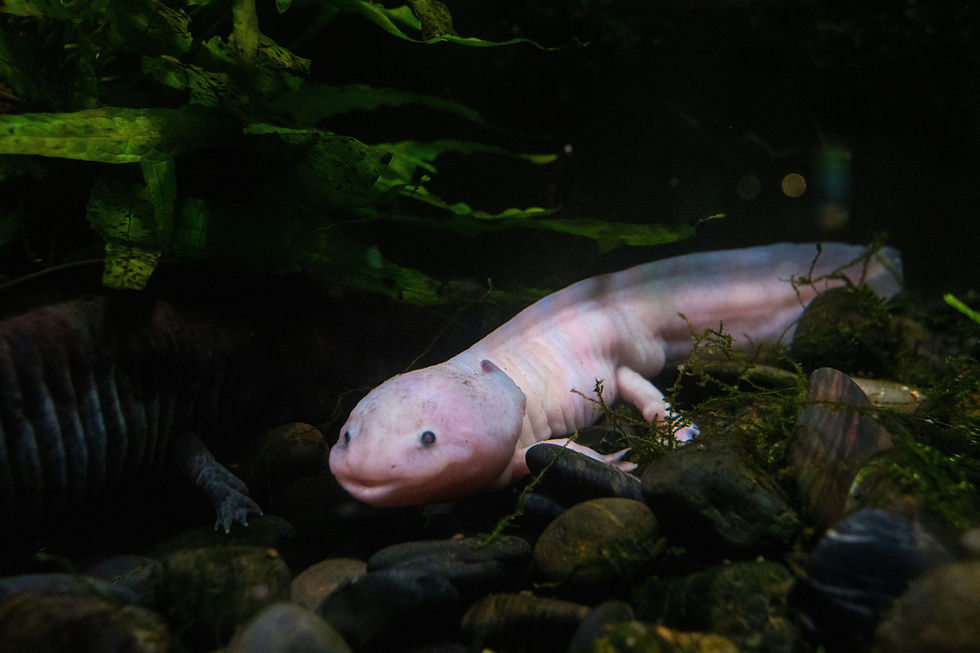
A creature from Mexico
Axolotls are native to the lake and canal system of Xochimilco near Mexico City, where they once lived more widely across the Mexican Central Valley. Today, their wild range is extremely small, and most wild axolotls survive only in that threatened habitat.
The name “axolotl” comes from Nahuatl, the language of the Aztecs, and the animal has long been part of Mexican culture. In many ways, it is both a local species and a global symbol of conservation.
Why it looks so unusual
What makes the axolotl stand out is that it does not fully grow out of its juvenile stage. Unlike many salamanders, it remains aquatic for life, keeps its external gills, and never develops the typical adult form seen in other amphibians.
Its broad head, tiny eyes, and smiling face give it a gentle appearance, but the axolotl is a skilled predator. It uses its senses to hunt small animals in the water, including worms, insects, mollusks, and tiny fish.

Its famous powers
The axolotl’s best-known trait is regeneration. If it loses a limb or suffers certain injuries, it can regrow the damaged body part, which has made the species famous in scientific research.
Scientists study axolotls because their biology may help reveal how tissue repair works in other animals, including humans. That makes the species valuable not only as a wildlife icon but also as a research animal with real medical importance.
Life in the water
Axolotls live in calm, still waters rather than fast-moving rivers. They prefer shallow, cool, plant-rich habitats, and in the wild they rely on clean water and stable environmental conditions to survive.
They breathe in a few ways. Their external gills are the most visible, but they also develop lungs and can absorb oxygen through their skin. This flexible breathing system helps them live fully aquatic lives.
A species under pressure
Despite their popularity in aquariums and research, wild axolotls are in serious trouble. Their habitat has been reduced by pollution, invasive species, habitat loss, and urban growth around Mexico City.
The axolotl is listed as Critically Endangered on the IUCN Red List in the wild, with only a tiny remnant population left. Conservation groups are working to restore water quality and protect the canals where the animal still survives.


Why people care
The axolotl captures attention because it seems almost magical. It looks like a cartoon creature, but every strange feature has a real biological purpose, from its gills to its regenerative ability.
It also matters because losing the axolotl would mean losing an animal found naturally in only one small part of the world. Protecting it helps protect a fragile freshwater ecosystem and the many species that share it.
The axolotl is more than just a cute amphibian. It is a living example of how unusual evolution can be, and a reminder that some of the world’s most extraordinary animals are also the most vulnerable.
🦎
Please check out our series “Did you know” with much more unique animal experience, for example


Comments