


Protected for Good: How Reserves, Fences and Partnerships Are Bringing Australian Wildlife Back

Australia's extinction crisis is a story we tell often and well. The other half of the story is less familiar: what recovery looks like when it works. In 2026 that second story is gathering pace, from the red dunes of far western Queensland to the fenced sanctuaries of the arid interior. The common threads are permanent protection, predator control and partnerships that last longer than a single political cycle.

A desert reserve, protected forever
In April, the Queensland Government declared the 228,657-hectare Pilungah Reserve, southwest of Mount Isa, as the state's third Special Wildlife Reserve. The property, formerly known as Cravens Peak, is owned by Bush Heritage Australia. It is now protected forever from other land uses such as mining.
Special Wildlife Reserves are a distinctly Queensland tool. Under the legislation, a private reserve receives the same level of statutory protection as a national park, and all incompatible land use rights must be extinguished before a declaration can be made. That makes a declaration a hard-won outcome, not a symbolic one.

Pilungah is also a first. It is the first Special Wildlife Reserve granted with cultural heritage as the leading reason. The reserve sits on Wangkamahdla Country, and Wangkamahdla Traditional Custodian Avelina Tarrago says it holds the largest concentration and variety of Aboriginal petroglyphs in Queensland. Bush Heritage worked with the Wangkamahdla Traditional Owners on the application.
The ecological value is just as high. The reserve protects gibber plains, red sandy dune fields, semi-permanent waterholes and Coolabah woodlands, and is home to one of the richest reptile assemblages on earth, including the woma, a rare desert python.
More may follow. Bush Heritage and Traditional Custodians have submitted Special Wildlife Reserve applications for four other reserves: Carnarvon Station, Yourka, Reedy Creek and Ethabuka.

The Australian Acoustic Observatory (A2O) is a continent-wide network of hundreds of solar-powered audio recorders, led by Queensland University of Technology and partners, that continuously capture Australia's soundscapes (birds, frogs, mammals, insects and more) and make the recordings openly available so researchers can monitor biodiversity and environmental change over time.
The Bilby comeback
If Pilungah shows what permanent protection can secure, the greater bilby shows what active management can achieve. Australian Wildlife Conservancy's (AWC) latest annual census estimates 5,330 bilbies across six sanctuaries and partnership sites in Western Australia, the Northern Territory, South Australia and New South Wales, more than four times the number five years ago. That is a steep climb from the estimated 3,300 recorded in 2025, and all six populations either increased or held steady over the past 12 months.

The pattern is clearest at Newhaven Wildlife Sanctuary in the Northern Territory, where the population has grown to about 530 from the original 66 founders. In far western New South Wales, a breeding trial at Mallee Cliffs National Park began in 2019 with 50 founder bilbies, and numbers have since climbed to almost 2,000.
Bilbies matter for more than their charm. AWC says a single bilby can turn over twenty tonnes of soil in a year through digging and burrowing. At Newhaven, ecologists report that other species, including golden bandicoots and burrowing bettongs, use bilby burrows. Bring back one engineer and others benefit.
It is also a reminder of how much has been lost. The greater bilby is listed as vulnerable under national environment law and survives in only about 20 per cent of its former range. Its cousin, the lesser bilby or yallara, is already extinct.

Commitment that outlasts the headlines
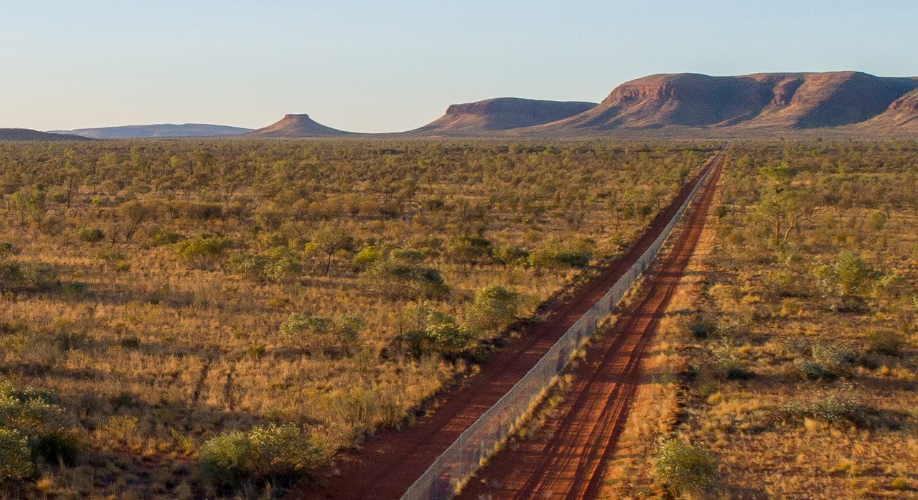
Recoveries like these take decades, so funding certainty matters. In June, the NSW Government extended its partnerships with AWC and the University of NSW's Wild Deserts program for a further 10 years. The partnerships cover Mallee Cliffs National Park, Pilliga State Conservation Area and Sturt National Park, three sites in a broader network of ten feral predator-free areas.
The agreement also looks beyond the fences. The partners say the next decade is about improving knowledge of what contributes to successful reintroductions, so that recovery can be driven across threatened species. AWC's chief executive, Tim Allard, said the partnership has proven what long-term collaboration can deliver for conservation.
The honest caveat
None of this means the crisis is over. Conservation groups marking National Threatened Species Day in September pointed to habitat loss, invasive species, disease and climate change as major threats to native wildlife. Fenced sanctuaries are a vital refuge, but they are not a final answer, and the long-term goal is wildlife thriving beyond the fence line. Nature also doesn't recover in a straight line. Dry conditions in 2022–23 hit the bilby population in Western Australia's Wheatbelt. Good seasons help, and bad ones set populations back.
What the wins have in common
The successes share a recipe. Threats such as foxes and cats are removed, land is protected permanently, Traditional Owners are partners in the work, and funding runs for years instead of months. As AWC's Tim Allard put it, the bilby's growth shows the resilience that emerges once key threats are finally removed.
That is the useful lesson from 2026. Recovery isn't luck or a miracle.
It is a set of decisions, and Australia now has several years of evidence that they work.

REFERENCE
Inside State Government, Daily News, 28 April 2026 (viewed 05/10/2026
Bush Heritage Australia, 17 June 2026 (viewed 06/10/20269
Australian Wildlife Conservancy, 14 April 2025 (viewed 06/10/2026)
30 March 2026
Australian Leisure Management, 07 September 2026 (viewed 06/10/2026)
30 June 2026
National Indigenous Times, 28 April 2026 (viewed 06/10/2026)


Comments