


Solar Now Bigger Than Coal in China

For decades, coal has been the defining fuel of China’s rise. It powered factories, built cities, made steel and cement, and supplied the electricity behind a vast industrial transformation. It has also made China the world’s largest annual emitter of carbon dioxide.
That is why a new milestone in China’s electricity system matters so much: solar power has now overtaken coal as the country’s largest source of installed generating capacity.
At the end of July 2026, China had approximately 1,286 gigawatts of solar capacity installed, compared with about 1,280 gigawatts of coal-fired capacity. Solar accounted for roughly 31.5% of the country’s enormous 4,000-gigawatt electricity fleet, narrowly moving ahead of coal’s 31% share. Wind capacity stood at about 660 GW, hydropower at 436 GW, and nuclear at 61 GW.

It is an extraordinary change in a remarkably short time. But it needs to be understood properly. Solar overtaking coal in installed capacity is not the same as solar replacing coal in daily electricity generation. China’s coal plants still generate far more power overall, and the country is still building and using coal infrastructure. Even so, this is a landmark in the direction of travel: the country with the world’s biggest coal fleet has also built the world’s biggest solar fleet-and it is now larger than that coal fleet on paper.
The significance is not that the energy transition is finished. It is that it has become physically impossible to dismiss as marginal.
Capacity is not generation
The most important distinction in this story is between capacity and generation.
Capacity is the maximum amount of electricity a power source could produce under ideal conditions. A 1-gigawatt coal plant can theoretically produce up to 1 gigawatt at a given moment, while a 1-gigawatt solar installation can also produce up to 1 gigawatt-when the sun is strong enough.
But coal and solar operate very differently.
A coal power station can run day and night, subject to maintenance, fuel supply and demand. Solar panels only generate electricity when sunlight is available, and output changes with the weather, seasons and time of day. As a result, each gigawatt of coal capacity generally produces more electricity over a year than each gigawatt of solar capacity.
That is exactly what is happening in China. Solar generated about 802 billion kilowatt-hours during the first seven months of 2026, an impressive amount of electricity but still only around one-eighth of China’s total generation. Coal remains central to the system because it provides large volumes of dispatchable power: electricity that can be called on when demand rises or when solar output falls.

So it would be inaccurate to say that China is now “powered mainly by solar.” It is not. Yet it would also be a mistake to downplay what has happened. The installation of more than 1.2 terawatts of solar equipment means China has created an enormous clean-energy foundation. Every panel capable of producing electricity is a panel that can reduce the need to burn coal or gas when conditions allow.
How China got here
China’s solar expansion has been driven by a combination of manufacturing strength, government policy, falling technology costs, land availability in some regions, and massive electricity demand.
The country is the global centre of solar-panel manufacturing. Its firms produce much of the world’s polysilicon, wafers, cells and modules, enabling large-scale deployment at costs that would have seemed unrealistic a decade ago. China has installed solar on rooftops, beside factories, across reservoirs and in large utility-scale projects in deserts and less densely populated regions.
The pace has been extraordinary. China added 86 GW of solar capacity in just the first seven months of 2026. To put that in perspective, that addition alone is larger than the entire solar fleet of many major economies.
However, the headline figure also reflects a rush to complete projects before a policy shift. China ended a system of guaranteed fixed prices for new wind and solar projects, prompting developers to accelerate construction before the rules changed. That partly explains why the rate of solar additions has slowed compared with the exceptional surge seen in 2025, when 93 GW was reportedly added in May alone.
A slowdown after such a rush should not automatically be interpreted as a collapse in renewable ambition. It may instead signal the transition from subsidy-supported build-out to a more market-based system. The real test will be whether China can keep adding renewable power while improving its grid, storage and electricity-market rules enough to use that power efficiently.
Why this matters globally
China’s domestic choices have consequences far beyond its borders.
The scale of its solar deployment is helping to push down the global cost of solar equipment. Lower costs make renewable electricity more accessible not only in wealthy countries, but also in developing economies that need new generation capacity and want to avoid locking themselves into expensive imported fossil fuels.
China’s shift also matters because it is the world’s largest carbon emitter. Reuters reported that the country’s carbon emissions fell 1% year-on-year in the second quarter of 2026, with a 9% fall in oil consumption linked in part to faster-than-expected consumer uptake of electric vehicles.
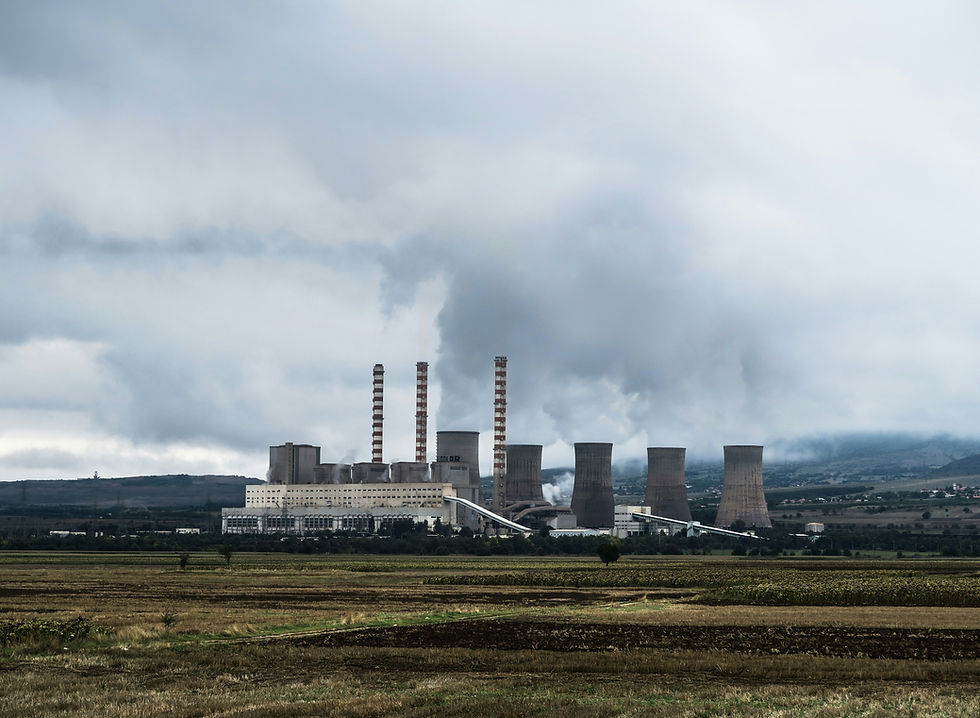
One quarter does not establish a long-term trend. Emissions can rise or fall because of weather, economic growth, industrial production, hydropower conditions, construction activity and other variables. Still, the data point gives a glimpse of how changes in transport, electricity and energy security can combine. Electric vehicles reduce oil demand; solar and wind reduce the need for fossil-fuelled electricity; batteries and grid upgrades can make variable renewables more useful; and the whole system gradually becomes less exposed to global fuel-price shocks.
This is especially relevant at a time when oil and gas supply disruptions have reminded governments of the political and economic vulnerability created by dependence on imported fuels. Renewable energy does not solve every energy-security challenge, but sunlight and wind are domestic resources. Once projects are built, their fuel cannot be embargoed, blockaded or subject to sudden price spikes.
The coal problem is still real
There is no honest version of this story in which coal has already been defeated.
China continues to rely heavily on coal for industrial heat, power-system stability and electricity generation. Its total electricity demand is enormous and still growing, driven by homes, factories, data centres, electric vehicles, air conditioning and broader economic development. In a system that large, adding renewables does not automatically mean closing coal plants at the same speed.
The risk is that China builds too much of both: huge volumes of solar, wind and batteries alongside continuing coal capacity. In that scenario, clean energy grows but emissions fall more slowly than the climate requires.

The better outcome is not merely more solar panels. It is a system in which clean generation displaces fossil generation. That requires investment in long-distance transmission lines to move renewable power from sunny and windy regions to major cities; batteries and other storage to shift electricity into the evening; flexible demand that can respond to supply; and electricity markets that reward clean, reliable power rather than simply keeping every coal station operating.
In other words, the next phase of the energy transition is less visible than a field of solar panels. It is about wires, substations, batteries, software, planning rules and the sometimes difficult politics of retiring older fossil-fuel assets.
A hopeful milestone, not a finishing line
China’s solar milestone should be celebrated for what it is: evidence that clean technology can be deployed at historic scale.
A country that once appeared inseparable from coal now has more solar generating capacity than coal capacity. That does not erase its emissions, resolve its coal dependence, or guarantee that global temperature goals will be met. But it changes what is plausible.
Only a few years ago, claims that solar could become the largest source of installed capacity in the world’s biggest electricity system would have sounded optimistic. Now it has happened.
The lesson for other countries-including Australia-is not that every nation can copy China’s model exactly. China has unusual industrial capacity, geography, population and political structures. The lesson is simpler: rapid change becomes possible when technology, manufacturing, infrastructure and policy begin pulling in the same direction.
Solar has passed coal in one crucial measure. The harder task now is ensuring that it increasingly replaces coal in the electricity people actually use.
☀️
Title Image Credit: Unsplash: https://unsplash.com/@pino_rumbero


Comments