


David Attenborough at 100: A life shaped by wonder

Sir David Attenborough’s 100th birthday marks not just a rare personal milestone, but the celebration of a career that helped define how much of the world understands nature. For more than seven decades, he has brought the beauty, fragility, and urgency of the natural world into homes across the globe, becoming one of the most influential broadcasters of all time.
Born in 1926, Attenborough began his career with the BBC in 1952 and went on to become a familiar voice and face in natural history television. His work did more than entertain: it made distant ecosystems feel close, memorable, and worth protecting.

Early career
Attenborough’s path into broadcasting began after studying natural sciences at Cambridge and serving in the Royal Navy, before joining the BBC in the early 1950s. He became known for adventurous, carefully made programs that mixed education with storytelling, including the landmark Zoo Quest series. Over time, he also took on senior BBC leadership roles, helping shape the future of television in Britain.
What set him apart was his ability to combine curiosity with clarity. He did not present nature as a dry subject; he presented it as a living drama full of movement, behavior, survival, and surprise. That style helped natural history reach audiences far beyond science enthusiasts.
Landmark documentaries
Attenborough’s name became inseparable from major wildlife series such as Life on Earth, The Living Planet, The Blue Planet, and Planet Earth. These productions raised the standard for wildlife filmmaking, with stunning visuals and narration that made complex ecological ideas accessible. They also helped establish the modern template for high-end natural history television.
His documentaries were important because they changed the scale of public attention. Instead of focusing only on charismatic animals, they showed whole systems: oceans, forests, deserts, and the links between species and habitat. That broader view encouraged viewers to think about nature as interconnected rather than isolated.

Conservation voice
In his early career, Attenborough’s work often centered on awe and discovery, but over time his message became more urgent. As climate change, habitat destruction, and biodiversity loss became harder to ignore, his films increasingly emphasized responsibility as well as wonder. By his later years, he had become not only a broadcaster but also one of the world’s most recognizable environmental voices.
That shift made his work especially powerful. He was able to speak to audiences who might never read a scientific report but would still listen to a trusted storyteller. In that sense, his influence has been as much cultural as scientific.
Centenary celebrations
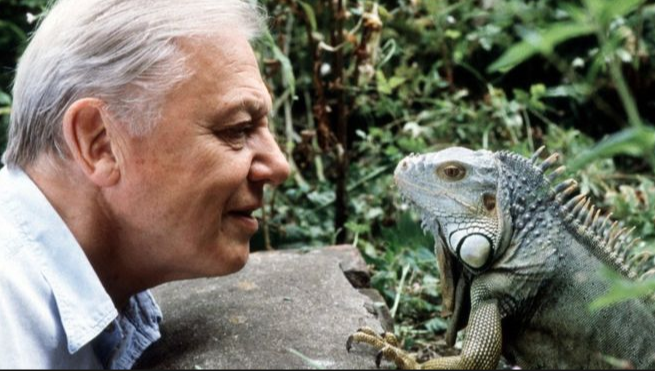
Attenborough’s 100th birthday has been marked with widespread tributes, special programming, and public celebrations in the UK and beyond. The BBC scheduled a slate of new and classic content to honor the occasion, while a special concert at the Royal Albert Hall was planned as part of the centenary festivities. The response reflects how deeply his work has entered public life.
He said ahead of the day that he was “completely overwhelmed” by the birthday messages he received. That reaction feels fitting for someone whose career has been built on humility, wonder, and a belief that the natural world deserves attention.
Enduring legacy
Attenborough’s legacy is not only the number of programs he has made, but the way he changed expectations for science communication. He showed that educational television could be elegant, emotionally moving, and globally influential. He also inspired generations of scientists, filmmakers, and conservationists who cite his work as a turning point in their own interests.
At 100, he stands as a rare figure whose work has spanned the age of black-and-white television, color broadcasting, and global streaming. Few individuals have done more to make the living world visible, memorable, and morally important.


Comments